
Bison Trailblazers | Dr. Majda Atieh Advances Literary Scholarship Across Borders
by Anna De Cheke Qualls
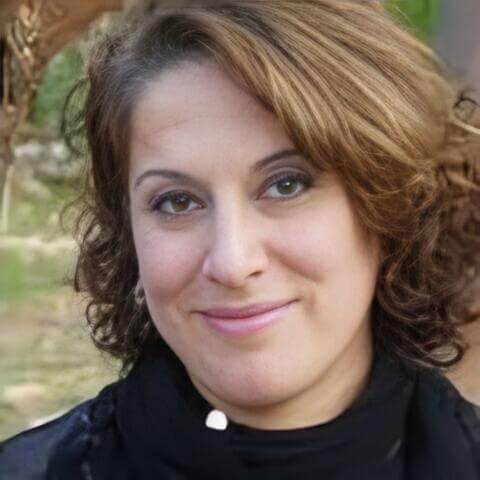
When PhD alum Dr. Majda Atieh reflects on her academic journey, she returns repeatedly to one idea: stories shape the world. “Literature is the reality and not a statement about reality,” she says, a belief that has guided her from a coastal Syrian childhood to Howard University and onward to her current role as Assistant Professor of English and Deputy Head of the Department of English and Translation at Sultan Qaboos University in Oman.
Her story — interwoven with migration, scholarship, resilience, and interdisciplinary innovation — exemplifies the impact of a Howard education amplified on the global stage.
Atieh’s journey began in Syria, where she completed her BA in English at Lattakia University. A post‑graduate Diploma in Literary Studies introduced her to African American literature — and to Toni Morrison, who would redirect her life.
“Beloved was the phenomenal narrative that redirected my life trajectory,” she explains. The novel moved her so deeply that she declined an offer for a local PhD program and instead applied for a Fulbright Scholarship, centering her application on Morrison’s work. In 2002, that decision brought her to Howard University — an institution she still speaks of with gratitude and pride.
“Howard University was selected as the ideal destination for my Fulbright scholarship,” she says. “My ‘Howard’ identity is constantly reflected in my daily classes and in my workplace.”
While Beloved ignited her passion, it was Morrison’s Paradise that shaped her graduate research. Reading the novel alongside Alf Laylah wa Laylah (One Thousand and One Nights), she began developing what would become her signature scholarly focus: sustainability as a literary and cultural framework.
A Mentor Who Changed Everything
During her earliest days at Howard, another transformative force entered her life. “Stay lovely darling, stay sharp, stay fierce and dynamic and thoughtful and gentle and wonderful and beautiful,” Dr. Eleanor W. Traylor would say — words Atieh still carries.
“I still hear the strong jingle of her African hoop earrings — the sound that dispelled my anxiety since my first days as an international student at Howard and continued to empower and uplift me,” she recalls.
She arrived uncertain and fraught with homesickness. Traylor met that uncertainty with her signature diva precision: pointed humor, incisive sarcasm, and an unflinching critique of Atieh’s first response paper.
“With that rigor, she challenged me to awaken Scheherazade and to claim my own narrative,” Atieh says. “That was my moment of initiation into the wondrous world of my MA and PhD supervisor, Dr. Eleanor W. Traylor, the legendary ‘Godmother,’ former chair, and the first Sterling Brown Professor of English and Humanities at Howard.”
The dissertation Atieh completed under Traylor’s supervision remains, in her words, “a binding testament to the tenacity she instilled in me: the remarkable must be paid for dearly.”
From Fiction to Architecture to Ecology
Atieh’s scholarship crosses traditional boundaries with intentional fluidity. “I examine how literary narratives cross generic and disciplinary borders,” she says. “In simpler terms, I include all stories to extend the bigger picture.”
Her interdisciplinary projects span digital humanities, museology, cultural sustainability, and architectural studies. She describes the narrative strategies she found in Paradise — “suspension, open-ended narration, and mimicry of hybrid architecture” — as foundational to her thinking about how literature interacts with space and ecology.
Her paper, “Age as Un/Sustainability in Architecture Collectibles: A Morrisonian Revisitation,” marked a professional turning point. “It ushered in my role as chair of the Collecting and Collectibles Area in the Popular Culture Association (PCA) in 2022,” she says. Since then, she has led annual PCA calls for papers exploring sustainability, AI, futurism, and crisis through the lens of collecting.
Her research later expanded to Omani museums — particularly the Oman Across Ages Museum. “It mobilizes the indigenous voice through environmentally‑friendly architecture that represents the Omani environment,” she explains, linking Morrisonian narrative strategies to Gulf cultural heritage.
A Leadership Philosophy Anchored at Howard
Across continents and roles, Atieh attributes her leadership style to the foundation she built at Howard. “Rootedness in Howard’s high standards of academic performance, unwavering commitment to excellence, and ‘truth in service’ conflates the driving force that contributes to my academic success,” she says.
She views research not merely as scholarship, but as leadership training: “I perceive a skilled researcher as an effective leader. The synthesis of ideas is a practice for logical argument. Interdisciplinarity mobilizes cultural awareness.”
Her international upbringing also shapes her approach. “Coming from an ancient country that embraces openness to other cultures — and a zone that experienced war — has shaped my appreciation for interaction, accessibility, and forward thinking.” From Howard, she learned another essential lesson: “Care, perseverance, and intelligence cannot be compromised in leadership.” Above all, she believes narrative is central to leading others. “Successful leadership should be grounded in effective self‑narrative.”
Demonstrating the Relevance of the Humanities
Atieh is deeply committed to dismantling the misconception that literature lacks relevance to professional pathways.
“Research and pedagogy in literature are misconstrued as detached from the job market,” she notes. In her own courses, she does the opposite, designing projects that show how literary study prepares students to be “museum curators, catalogue specialists, archivists, gallery annotators, or bulletin designers.”
Her work increasingly engages with technology, especially artificial intelligence — not as a threat to writing, but as a catalyst for strengthening human authorship.
“My literature courses at SQU feature revamped writing assignments that emphasize how proactively harnessed AI technology is needed to leverage trust in the authority of our natural writing and to reposition our ‘critical human’ activities. AI technology is definitely fundamental for boosting students’ agency as autonomous and confident human writers. So, human agency in writing should not be aligned with the denial of AI ubiquity.”
She sees emerging scholarly promise in AI Climate Change Narratives as well. “They reflect the increasing literary interest in the role of AI in discontinuing the inequities of centralized technology that exacerbate environmental damage,” she says.
Global Engagement, Renewal, and Purpose
These days, Atieh continues to maintain active academic networks both in the Middle East and the United States. “Local careers cannot be developed without bringing new, diverse, and broader perspectives,” she says.
She engages in international collaborations through alumni networks, research partnerships, conference panels, editorial boards, and virtual workshops. This global engagement, she explains, “mobilizes inclusiveness, fairness, and equity,” while also bringing “intellectual renewal that helps me reframe my local commitments with greater clarity.”
As a Middle Eastern woman in academia, Atieh feels a profound sense of purpose. “In these difficult times, Middle Eastern women’s responsibilities as carriers of hope are more recognized than ever,” she says. “Steadfastness in principles is my translation of hope.”
Outside work, she finds grounding in the past — literally. “Exploration of antique and vintage shops or exhibitions is my regenerative activity,” she shares. “Collecting old items boosts my restorative nostalgia. It brings emotional balance and continuity.”
A Howard Story Written Across Continents
Across two decades, three countries, and countless disciplinary intersections, Dr. Majda Atieh has cultivated a scholarship defined by curiosity, resilience, and an unwavering belief in the power of narrative.
Her journey — inspired by Morrison, shaped by Traylor, nurtured at Howard, and expanded globally — continues to highlight what she learned early on:
“I include all stories to extend the bigger picture.”