
Word to the Wise | A Scholar in Nairobi: How a Two‑Week Residency Sparked a Cross‑Continental Movement for Women’s Health
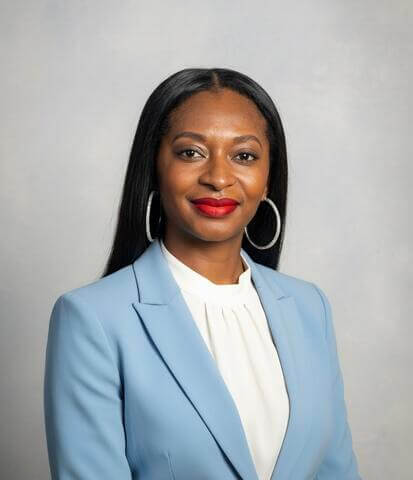
by Anna De Cheke Qualls
When PhD Alum Dr. Adana A. M. Llanos stepped into the warm Nairobi morning in February the air held that peculiar blend of dust, jacaranda blossoms, and possibility. She had arrived with a clear purpose—two weeks as Scholar‑in‑Residence at the Columbia University's Global Center in Nairobi, a short window to deepen partnerships and advance research on chemical exposures and women’s health. But what she encountered was something far more alive: an ecosystem already pulsing with potential, waiting for someone to help connect the threads.
“It didn’t feel like starting something new,” Llanos later reflected. “It felt like walking into a conversation already in motion—and being invited to help shape what comes next.”
Her days filled quickly. At the 16th KEMRI Annual Scientific and Health Conference, she co‑chaired a symposium that pulled an unusually diverse audience: researchers, policymakers, local cosmetologists, and breast cancer survivors all crammed into the same room, leaning forward in their seats. The presentations mapped the emerging science around environmental exposures from personal care products—lotions, creams, and hair treatments that Kenyan women use every day—tracing how these seemingly mundane items may shape long‑term health outcomes.
One attendee described the session with awe. “It wasn’t just the data. It was seeing a scientific problem suddenly shared by regulators, community advocates, and the women most affected. That doesn’t happen in our conferences.”
A representative from the Kenya Bureau of Standards spoke candidly about regulatory gaps. A cancer survivor offered a quiet but powerful testimony about navigating treatment while evaluating the safety of her everyday products. And at the center of it all, Llanos helped frame the conversation not as an isolated research finding, but as an opportunity for national action.
If the symposium revealed the power of collective inquiry, her meeting at the National Cancer Institute of Kenya revealed the urgency behind it. Sitting with CEO Dr. Elias Melly and his leadership team, Llanos entered into what she later described as “one of the most forward‑leaning conversations I’ve ever had with national cancer leadership.” They discussed how scientific evidence about chemical exposures could move from laboratory bench to national cancer control strategies—from environmental health insight to public prevention. Plans began forming for an unprecedented multi‑sector convening involving regulators, researchers, and the cosmetics industry—groups that rarely share a table.
“There was this recognition that prevention has to start earlier—before screening, before diagnosis, before treatment,” recalls Llanos. “And that requires us to talk to communities and industries we don’t always talk to.”
That spirit of alignment carried into a strategic planning meeting with leaders from KEMRI, NCI‑Kenya, and the Columbia Global Center. They began sketching the architecture of a coordinated, multi‑institutional collaborative devoted to women’s health and cancer prevention. The ideas came quickly: public education about chemical exposures; strengthened cancer screening networks; scaled HPV vaccination efforts; expanded research mentorship; and bi‑directional training programs for graduate students in both Kenya and New York.
A Kenyan colleague summed up the mood in the room: “For the first time, we weren’t talking in silos. We were talking like a country ready to build something together.”
As her residency gained momentum, Llanos delivered a webinar titled “From Beauty Practices to Health Outcomes,” a session that unexpectedly became the largest the hosting institutions had ever held—more than 1,500 attendees from across sectors. Screens lit up across the region: medical students huddled in dorms, community health workers tuning in after long shifts, researchers logging in from neighboring countries.
“That turnout told us everything,” she said afterward. “People are hungry for this conversation. They’ve just been waiting for a space to have it.”
In between public engagements, Llanos and her KEMRI collaborators met to push forward manuscripts, refine grant proposals, and chart next‑phase funding strategies for their bi‑national research program—work that began with a chance meeting at a 2019 conference and has since grown into a durable, cross‑institutional engine. With pilot funding already generating key preliminary data, they focused on sustaining momentum amid shifting policies around international research support.
“Partnerships like this aren’t built in a day,” one collaborator reflected. “But once they’re built, they can move mountains.”
Mentorship and training became another defining thread of the residency. At KEMRI’s Graduate School, Llanos explored formal co‑supervision models that would give Kenyan graduate students more direct access to cancer epidemiology mentorship. She also advocated for future exchanges that would send students from Columbia to Kenya—and Kenyan trainees to New York—creating a pipeline of early‑career scholars grounded in cross‑cultural scientific collaboration.
Outside the conference rooms and lecture halls, her work took on a different rhythm. Llanos continued her Kiswahili studies—ongoing for two years—with an in‑person instructor. “Language is not incidental,” she explained. “You cannot do community‑engaged research if you cannot truly hear the people you’re speaking to.” A visit to Kiambu, a village just outside Nairobi, offered yet another kind of insight—one rooted in daily life, local beauty practices, and lived experience.
By the time the residency drew to a close, Dr. Llanos had helped set in motion initiatives that would long outlast her stay. Columbia’s presence in the region was more visible. The Kenyan institutions involved were newly connected in purpose. Research agendas had sharpened. Training pathways had expanded. And perhaps most meaningfully, a community‑centered approach to women’s health—one honoring science, culture, and equity—had begun to take shape.
“This residency wasn’t about the two weeks,” Llanos said as she prepared to leave. “It was about what those two weeks made possible.”