
Professional Development | Transformational Advice from Alum Dr. Tracey Thomas
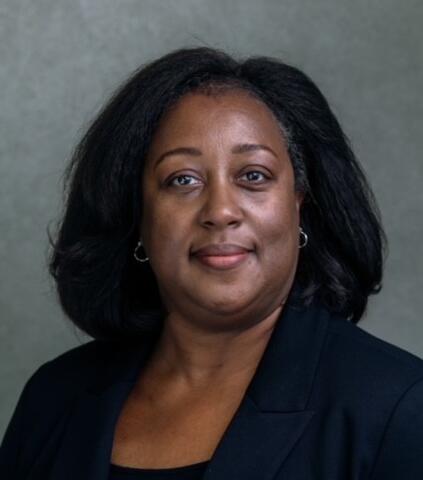
By Tracey W. Thomas, PhD, More Than STEM
Department of Biology, PhD Class of 2000
If you're a graduate student at Howard, you've probably been asked some version of "so, what's the plan?" more times than you can count. I'd like to offer a different question, one that has carried me further than any plan: what have you built, and where could it matter?
When I was a doctoral student here, my plan was simple. I would study the mechanisms of biological systems, earn my PhD, and become a professor who trained the next generation of bench scientists. Well… sort of. Two decades later, I've worked in science policy, biodefense, and strategic communications, and I now help doctoral-trained professionals navigate this exact question. None of it was in the plan. What I did have was a foundation, and Howard gave it to me. It didn't prepare me for one job. It prepared me to walk into rooms I had never been in and figure out how to contribute once I got there.
The Career You Start with May Not Be the Career You Keep
I loved science. Every single step of it. I spent years building expertise in molecular biology and virology that I wouldn't trade for anything. But I started doing lab work at 17, and by the end of my postdoc I had logged 13 years at the bench, many of them with all four burners on. The science never wore me down, but the pace did. Both things were true at the same time. Leaving the bench didn't mean abandoning everything I had built. It meant asking a different question: what else can I do with what I know?
The answer came through the AAAS Science & Technology Policy Fellowship. I already knew AAAS from my postdoc, when I worked with them as a science writer, and I knew them as a premier science organization, both as the publisher of Science and as a leader in science policy. The application process was rigorous. It required an updated CV, letters of recommendation, a personal statement, and interview after interview with leads from government agencies. I worked hard at explaining my small corner of science to people in the policy world in a way that would both intrigue and impress them.
When I started at the National Center for Environmental Assessment at the Environmental Protection Agency, the first six months felt like drinking from a fire hose. There was so much to absorb: how science actually informs policy, who was who in government, and who the other fellows were. But it did not feel like starting over. I was using my science and my skills, just in a different arena.
From there, I moved into biodefense, where I have spent much of my career at the intersection of science, national security, public health, and strategy. If you had told the young scientist I was at Howard that I would end up supporting national defense programs and talking about biological threats and strategic communications, I would have had a lot of questions, and then I would have gone back to the lab. That's the point. Careers rarely unfold in a straight line, and the more useful skill isn't predicting the path. It's learning to evolve along it.
Career Agency Is Different from Having a Career Plan
We put a lot of emphasis on having a plan. What is your five-year plan? Where do you see yourself in ten years? What is your next position? These questions have their place, but after more than two decades of professional experience, I think there is something more important than having a perfectly mapped career. It is having career agency.
Career agency is the ability to understand what you bring to the table, recognize where that value might matter, make informed choices, and adjust when your circumstances, interests, or opportunities change. It means you can say:
- This is what I know.
- This is what I can do.
- This is what I have learned.
- This is where I think I can create value.
- And this is where I want to go next.
That is very different from simply asking, “What job am I qualified for?” Because sometimes the most interesting opportunities are not obvious from your job title or your degree. My biology degree and PhD did not have “biodefense” written on them. But the skills I developed as a bench scientist were transferable and prepared me to understand complex biological threats, evaluate evidence, work across disciplines, and communicate technical information to people who did not have my scientific background. The degree was the foundation, and the career came from learning how to build on that foundation.
A word of honesty here… career agency isn't unlimited freedom. Funding timelines, visa status, family responsibilities, and an advisor who sees exploration as disloyalty are real constraints, and no framework makes them disappear. Agency means working with the constraints you have, not pretending you don't have them. A five-year plan can still be useful, especially for funding and degree milestones. Think of it as a working hypothesis you're allowed to revise.
You may not be able to change direction this semester. You can still read one job description, have one conversation, or write down one thing you enjoy doing. Small moves count, and at first, they may be the only moves available.
A Five-Question Career Trajectory Check
If you are currently pursuing a doctorate, you do not need to figure out your entire career right now. In fact, I would argue that trying to do that may be the wrong goal. Instead, try this…
Take a piece of paper and answer these five questions without overthinking them:
1. What have I built?
List the expertise, skills, experiences, and relationships you're developing through your doctoral work, and don't limit yourself to the technical. Include research, writing, presenting, teaching, mentoring, project management, collaboration, problem solving, leadership, data analysis, and navigating ambiguity, along with anything else you've learned to do well. I’m guessing you’ve learned a lot!
What do I actually enjoy doing?
Forget what you're good at for a moment. What do you actually enjoy? Do you like solving complex problems? Explaining ideas? Building something from scratch? Working with people? Analyzing information? Leading? Writing? Investigating? Organizing chaos? Being capable of something is not the same as wanting it in your career, and that distinction matters.
2. Where could these capabilities create value?
Now step deliberately outside the job titles you already know. Where else could these capabilities matter? Industry? Government? Consulting? Policy? Communications? Technology? Nonprofits? Entrepreneurship? National security? Healthcare? Education? You're not choosing a career yet. You're expanding the map.
3. What am I curious enough to explore?
Pick one or two areas that make you curious, then take a small step toward them, whether that means talking to someone who works there, reading job descriptions, attending a professional meeting, following an organization, or asking a professor or alum for an introduction. You're gathering intelligence, not making a life-changing decision.
4. What would I like to be true two years from now?
Again, forget for a moment which job title you want. Ask instead what you want to have learned, experienced, built, or become. That question gives you something a job title cannot: direction. Put your answers together and look for the patterns.
This is the beginning of career intelligence: knowing the landscape and your place in it. You may discover that you're more interested in a particular type of problem than a particular field, that you want to use your science without spending your days doing experiments, or that you love technical work but want more leadership. Or you may discover nothing yet, and that's okay too. Knowing what to explore next is still progress.
You Are Not Starting Over
This is one of the ideas I find myself returning to again and again in my work with doctoral professionals through More Than STEM. People often describe career transitions as starting over, but they aren't. They may be new to an industry, a function, or a particular organization, yet they are rarely new to learning complicated things, solving difficult problems, managing projects, communicating, collaborating, analyzing information, or figuring things out when there is no obvious answer. Those capabilities travel – they are transferable skills. The challenge is recognizing them as professional assets and learning how to apply them in a different environment. That is a skill in itself, and it is one that becomes increasingly important as careers evolve.
What Howard Gave Me
When I look back, I realize Howard prepared me for far more than becoming a scientist. It prepared me to be intellectually curious and professionally confident. To understand that expertise matters, but so does knowing how to use it. To be comfortable around people who are different from me. To take my seat at the table even when I was not entirely sure what the conversation would be. Those lessons followed me from biology into policy, from policy into biodefense, and from there into a career that I could not have described when I was conducting experiments in a Howard lab or teaching undergrads as a teaching assistant.
That foundation has allowed me to evolve, and I think that may be one of the greatest gifts an education can provide. Not a single destination, but the capacity to keep becoming.
So wherever you are in your career, I would encourage you to keep asking yourself the five questions above and not just “what job should I have next?”. And perhaps most importantly, “what would change if I stopped treating my current career as a final answer?”
Your career does not have to make sense from the beginning to the end. It just needs to remain yours, and sometimes the most interesting chapter is the one you could not have planned.
Where to Start This Week
Have one informational conversation. Ask for 20 minutes with a Howard alum, a researcher in a field you're curious about, or a speaker whose work you admire. You might say: "I'm a doctoral student in [field] exploring [area]. Could I ask you three questions about how you got where you are?" Good questions to bring include: What does a typical week look like? Which skills matter most that people often overlook? What would you do differently?
Bring it up with your advisor as growth, not departure. Try: "I'd like to build skills in [communication, policy, data, management] alongside my research. Can we talk about how to make room for that?" Many advisors respond better to that than to "I'm thinking about leaving."
Use what's already around you. Howard offers strong programming for graduate students exploring what's next. Visit the Graduate School’s career resources ( https://gs.howard.edu/student-support/graduate-careers) or stop by The Graduate School the next time you're on campus. The alumni association and professional organizations in your field are also worth tapping.
Look at fellowships and professional societies. The AAAS fellowship is one door. Others include the Department of Energy Innovator Fellowship (ORISE) and the Christine Mirzayan Science & Technology Policy Graduate Fellowship. Student memberships in professional societies often include career sessions and mentoring, too.
Stay in touch. I'm happy to talk. Reach me on Instagram (@more_than_stem) or at more-than-stem.com.