
data week dr quarkume
By Davion Washington
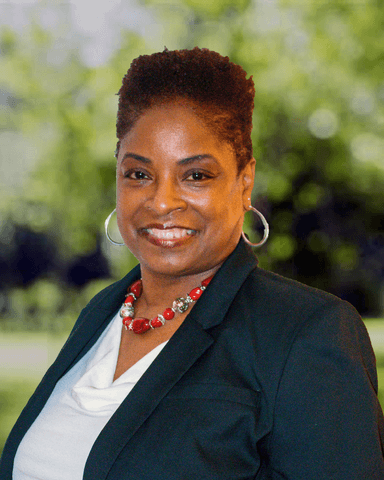
Dr. Pamela Carter-Nolan believes “public health is embedded in Howard’s legacy,” a commitment that has shaped her lifelong connection to the university. After earning a B.S. in community health education from the University of Massachusetts at Amherst, an MPH from Yale, and a PhD in epidemiology from the University of Pittsburgh, she came to Howard as a postdoctoral fellow and now serves as Director of the Master of Public Health (MPH) program.
Driven by her vision for a formal MPH program at Howard, Carter-Nolan launched the first cohort in 2004. She values the chance to influence a field grounded in “social justice, equity, truth, and service,” and has contributed decades of scholarship and leadership to both Howard and the wider public health community.
Howard’s roots in public health stretch back to the 1980s, when national leaders identified the University as one of the top three potential sites for a school of public health. Although the program was suspended in 2008, it was reinstated in 2017 under President Wayne A.I. Frederick and relaunched in 2018 by Provost Anthony Wutoh. Today, the program is expanding and progressing toward accreditation. In 2025, it led a green move-out initiative, partnered with the Epilepsy Foundation Public Health Institute, competed in the DC Public Health Case Challenge—winning the Most Practical Solution award—and co-hosted the 2025 American Public Health Association Conference Reception and Gala.
With over 20 years as Director, Carter-Nolan has broadened access by creating dual-degree options with the PharmD and MSW programs and envisions a future PhD in Public Health. The Sway spoke with her about her journey and the evolving role of public health at Howard and beyond.
The Sway (TS): What made you want to bring the MPH program to Howard, among the various graduate programs the university already had in place?
Dr. Pamela Carter Nolan (PCN): I did not bring public health to Howard University; it has always existed here. Public Health is embedded in Howard’s legacy. I have simply had the honor of helping to coordinate those longstanding efforts and guide the development of a formal training program.
I was trained and mentored by one of the first African American Deans of a School of Public Health, Dr. William Darity, Sr., who once shared with me that in the 1980s, Howard University was identified by national public health leaders as one of the top three locations where a school of public health should be established, because of its strategic location and the depth of work already underway. When I joined Howard as a research associate in the Cancer Center, I saw firsthand the breadth of public health‑related research being conducted by some of the most respected figures in the field. The foundation was already here; the vision simply needed a structure to match it.
Public health training at Howard University has deep roots. In the late 1980s, the Department of Community Health and Family Medicine (now the Department of Community and Family Medicine) launched a Master of Science in Public Health (MSPH) degree program that operated for several years. Later, in 2002, Dr. Floyd Malveaux, former Dean of the College of Medicine, convened a working group of public health–trained professionals from across the Colleges of Medicine, Dentistry, Nursing and Allied Health Sciences, and Pharmacy to explore establishing an MPH program. In 2003, Dr. Mohammad Akhter, then Senior Associate Dean of Public and International Health, and a former President of the American Public Health Association, was recruited to formally develop the program. The Board of Trustees approved the Master of Public Health (MPH) program in February 2004, and we welcomed our first cohort of 18 students soon after. The program trained 61 students through 2008, at which point the university made the difficult decision to suspend it.
But even during those years without a formal degree program, the public health mission at Howard never stopped. Faculty continued to lead research, community programs, and policy work that aligned with the core values of the field. In 2017, President Wayne A.I. Frederick announced that the MPH program would be reinstated. With the strong support of Provost Anthony Wutoh, the program was relaunched in 2018 within the Graduate School, where it continues to grow, train new cohorts, and move toward accreditation by the Council on Education for Public Health.
So, to answer the question: I did not bring public health to Howard University, public health brought (and kept) me here. I simply stepped into a legacy already in motion and committed myself to helping shape it into the unified, impactful program our students and communities deserve. And let me be clear, none of this was achieved alone. The progress we have made has been possible only because of a dedicated, mission‑driven group of faculty and staff who stand in the trenches with me every step of the way. Their passion, resilience, and unwavering commitment to strengthening public health at Howard are the reasons this unified vision has become a reality.
TS: How would you describe the field of Public Health in one sentence, especially to someone who may not be familiar with it?
To put this into one sentence is very hard. Some may think that public health is limited to a narrow scope of practice such as mitigating infectious disease, but it is much more. However, if I must describe it in one sentence, I would say, public health is the science and practice of understanding what affects people’s physical and mental health and then protecting and improving the health of communities through prevention, education, and policy, using data driven solutions.
TS: For prospective students considering pursuing an MPH at Howard, what words of encouragement or advice would you offer?
PCN: For students considering an MPH at Howard University, I would encourage them to “stay the course,” because public health is essential, indispensable, and often life‑saving. Choosing to pursue a Master of Public Health is choosing a life of service, a commitment to work where the true rewards are not immediate financial gain, but the lives strengthened, the disparities addressed and narrowed, and the healthier futures created because of the work we do. It is a calling to lift communities, protect the vulnerable, and build systems that allow people not only to survive, but to truly thrive.
Public health often operates behind the scenes, yet its impact is everywhere. And while the field faces moments of turmoil, political pressures, resource limitations, and uncertainty, those storms always pass. What remains is the steady, unshakable truth that public health continually rises to meet every challenge, every crisis, and every call for leadership with purpose and resilience.
Recent years have made this clearer than ever. When the world needed guidance, protection, and clarity, it was public health professionals (bench scientists, epidemiologists, community educators, data analysts, policy advocates, clinicians, and many others) who stood on the frontlines and helped save millions. Their work embodies the core questions of public health, How do we prevent harm before it happens? How do we build healthier systems for everyone, not just for a few?
Choosing this path means stepping into a legacy of service and justice. At Howard, that legacy runs even deeper. Here, public health is not just a profession, it is a mission rooted in social justice, equity, truth, and service. You are joining a community that believes in transformative work and truly understands the responsibility and privilege of improving the health of populations.
If you choose this path, you are entering a discipline that will challenge you, inspire you, and ultimately empower you to be a profound force for change.
TS: As you approach 25 years as a devoted faculty member here at Howard University, in what ways do you feel you have contributed the most?
PCN: I once heard a very wise woman, Dean Dana Williams, say that one of the reasons she is at Howard University is because she is mission‑driven. That message has stayed with me. After over two decades here in various capacities, it helped me understand my own purpose even more clearly. My feelings are mixed because, in many ways, my commitment, devotion, and contributions to this institution far exceed my professional advancement in a field that is often undervalued. Yet, despite that, I remain deeply rooted in the mission that brought me here.
What I consider my greatest accomplishment is not an individual milestone, but the work of bringing together a devoted group of faculty and staff who share a genuine commitment to seeing this MPH program thrive. I have been fortunate to have a supportive Dean, Provost, and President who believe in the program’s potential and champion its growth. With the right resources, dedicated faculty, and systems that allow us to leverage public health expertise across the university, this program could be recognized at an even higher level.
Throughout my career, I have dedicated myself to training graduate and professional students in public health practice and research. As the founding director of the MPH program, I have often had limited time to pursue my own professional advancement because so much of my energy has been devoted to building, directing, and teaching within this program. Even so, this work has been profoundly meaningful. We are now closer to accreditation than ever before—we have completed our self‑study report and will soon submit it for initial review by the accrediting body. For some, this milestone might seem small, but for a small, under‑resourced team, it represents a tremendous achievement and a testament to what dedication can accomplish. And all of this has been made possible by the dedication, talent, and exceptional teamwork of those who have stood with me throughout this journey.
In short, my three greatest contributions are: 1) training some dynamic people who have gone on to do great things; 2) building a team that has been instrumental to getting the MPH program to this phase of accreditation; and 3) basically pouring my professional life into building the foundation, structure, and spirit of this program, ensuring that it not only exists, but stands ready to train and serve future public health leaders with excellence.
TS: What current research interests have your attention at the moment, and why are they important to you right now?
PCN: There are several areas of research that have my attention right now, particularly those that reflect both emerging public health priorities and long‑standing inequities. I am especially interested in the intersection of Artificial Intelligence and public health, the crisis of maternal mortality, the evolution of public health information and technology, violence as a public health issue, and the ongoing need for training and capacity‑building in public health research. These areas represent some of the most pressing challenges facing our communities today, and they offer opportunities to shape systems, strengthen data‑driven approaches, and improve outcomes for populations that have historically been underrepresented.
At present, our public health faculty are deeply engaged in cancer‑related research, including modifiable risk factors linked to breast, prostate, and colorectal cancers; survivorship; and the role of nutrition and physical activity in prevention and recovery. We also have active work underway in smoking cessation, sexual health, and STIs among adolescents and young adults. In addition, our team frequently serves as the evaluation arm for several grants and contracts, ensuring that programs serving our communities are guided by evidence, accountability, and meaningful outcomes.
While these are major areas of our current research portfolio, we are also very open and intentional about expanding into new and emerging areas of public health research. Fields such as mental and behavioral health, health equity and anti-racism research, climate and environmental health, emergency preparedness, data science, and digital public health innovation are becoming more relevant than ever. These are areas where public health can make profound changes, and areas where Howard is uniquely positioned to lead.
Looking ahead, we are committed to developing expanded training programs to expose and engage our public health students early and consistently throughout their academic journey. Funding for a program like this is essential. Our goal is to secure a major gift that will support a longitudinal training model, one that provides structured research exposure, mentorship, and community‑based learning experiences beginning as early as a student’s first semester. This model will provide a mentored pathway that allows students to carry a single, meaningful public health issue through various stages of exploration, development, analysis, and application, culminating in the Public Health Capstone project. Additionally, we desire to create a two-year public health-research-practitioner fellowship. Similar to the mentored career development offered at the postdoctoral level. Our model for Master’s-prepared public health professionals will not only strengthen professional preparation but also helps cultivate the next generation of public health scholars and practitioners who are deeply rooted in equity, cultural competence, and community‑engaged research.
Ultimately, what guides our research is the same mission that grounds our program, addressing the needs of people of color, reducing inequities, and building evidence that improves lives. As we continue to grow, our goal is to broaden our research footprint while remaining rooted in the communities we serve, and to ensure that our students gain exposure to both foundational and cutting‑edge public health research and practice.
TS: What made you focus specifically on the field of Public Health?
PCN: Ironically, I found my way into public health at the very moment I began to lose interest in becoming a physician. Growing up, I was certain I would become a pediatrician. I excelled in science and math, loved working with children, and believed medicine was the only pathway to helping people. But once I entered college, I realized the landscape was much broader than the handful of careers I had been exposed to (business, dentistry, education, law, medicine, and nursing).
A tough summer of organic chemistry forced me to pause and reevaluate things. As a student‑athlete at a majority institution with limited mentorship, much of my environment focused on the next competition; but I was thinking about my future. I was encouraged to speak with the Dean of the School of Public Health (one of the few Black professors on campus) because of his leadership and expertise. That meeting changed everything.
After one conversation with Dean William Darity, Sr., I agreed to work with him on a summer grant to see if I liked public health. That summer, I worked alongside him and individuals from one of the local health departments on a smoking cessation project, and from that point on, I never looked back. I had found my passion, a field that brought together all the things I cared about: science, community, prevention, equity, and impact. It also did not hurt that the public health curriculum was very science heavy, and many of my courses counted towards the degree.
My academic journey reflects how fully the field captured me. My B.S. in Community Health Education grounded me in understanding people, communities, and behavior. My MPH in Health Policy allowed me to explore how systems, laws, and structures shape health outcomes and community. And my Ph.D. in Epidemiology equipped me with the analytical rigor needed to understand patterns, prevent disease, and guide decision‑making. Together, these degrees prepared me not only to practice public health, but to lead it.
At the heart of it all, I stayed in public health because I discovered something profoundly meaningful, and I stay at Howard because there is no better place to train students in public health, develop curricula that meaningfully address the needs of people of color, and conduct research that speaks directly to the communities we serve. It might sound like I am on my “soapbox” but public health is where science meets humanity, and where a single career can change the trajectory of entire communities. And this continues to drive me every day, especially in an environment I love and a mission to which I am deeply committed.
TS: What makes Howard’s MPH program stand out among other HBCU programs?
PCN: Howard’s MPH program stands out because it is interdisciplinary in nature and intentionally built at the intersection of public health, social justice, and service, a core part of the University’s history and mission. The program is accelerated and designed to be completed in 18 months, giving students a rigorous yet efficient path into the field while still providing the depth and breadth necessary for effective public health leadership. It is uniquely interdisciplinary, preparing students to lead through research, practice, and policy, with a core emphasis on eliminating health disparities and advancing the health of vulnerable populations.
What further distinguishes the MPH Program is its location in the nation’s capital, where students gain direct access to premier public health organizations such as the American Public Health Association, the Public Health Foundation, the Public Health Institute, and the Pan American Health Organization. This proximity creates unmatched opportunities for experiential learning, networking, and national and global engagement opportunities that may be unavailable at this scale within other HBCU programs.
Howard’s MPH program also stands out because of its practicing faculty, professionals who are actively engaged in advancing public health for underserved communities through community partnerships as well as national and global collaborations. Students are taught not only by academicians and scholars, but by practitioners who embody the mission of public health every day.
Additionally, Howard offers innovative dual‑degree opportunities, including the Master of Social Work and MPH (MSW/MPH) and Doctor of Pharmacy and MPH (PharmD/MPH), enabling students to integrate public health with social work or pharmacy, thus broadening their impact, and expanding their career pathways.
It is important to note that Howard is a proud member of the Consortium of African American Public Health Programs (CAAPHPs), a collaborative network of HBCU-based public health programs (and schools) that support one another, share resources, and collectively strengthen public health education and research for Black and underserved communities. This partnership underscores Howard’s commitment to community, collaboration, and capacity-building across institutions dedicated to equity and justice in public health.
These elements combined make Howard’s MPH program not only distinctive among HBCUs, but deeply impactful. It is a program where academic excellence, cultural relevance, and mission-driven purpose converge while preparing students to lead, transform systems, and improve the health of communities that need it most.
TS: Can you speak about the dual degree programs associated with Public Health, such as the MSW/MPH and PharmD/MPH?
PCN: Currently, Howard offers two approved dual‑degree programs, the MSW/MPH and the PharmD/MPH, both of which reflect our commitment to interdisciplinary public health training. These programs deepen the strength of our MPH curriculum and expand the pathways through which students can influence health at the individual, community, and systems levels. Our dual‑degree programs are intentionally structured to prepare students for leadership roles that sit at the intersection of public health and their specific discipline. By integrating coursework, hands‑on training, and community‑engaged practice, these pathways allow students to deepen their expertise, build broader skill sets, and expand the impact they can have in the communities they serve.
Since 2019, Our MSW/MPH program has produced 12 graduates who are doing transformative work in their communities by addressing the social determinants of health, leading community‑based initiatives, and influencing policies that directly affect vulnerable populations. Their success underscores the power of blending public health with the deep, person‑centered training of social work.
The PharmD/MPH dual‑degree pathway is one of our newest offerings, and although still early in its development, it has already attracted strong interest. We currently have one exceptional student enrolled, and a recent information session confirmed that demand for this integrated training is growing. As pharmacists increasingly step into roles involving community health, health education, medication safety, and chronic disease management, this dual program positions graduates at the forefront of evolving public health needs.
These dual‑degree programs do more than expand student opportunities. They also help build and strengthen Howard’s MPH program. They draw connections across disciplines, foster collaboration among faculty in multiple schools, and create a pipeline of graduates uniquely prepared to lead in diverse sectors. They reinforce what makes Howard distinctive as an environment where public health education is mission‑driven, culturally grounded, and designed to address the needs of people of color and underserved communities.
Together, these programs reflect our belief that public health does not stand alone; it thrives in partnership with disciplines that share its commitment to equity, service, and community impact.
We anticipate more dual-degree programs as the Public Health program grows.
TS: What is the importance of Public Health within the Black community?
PCN: Public health is critically important in the Black community because it addresses long‑standing health inequities, improves access to preventive care, and strengthens community‑based solutions that reduce avoidable illness and death. It empowers individuals and communities with the knowledge, resources, and advocacy needed to improve health outcomes, protect future generations, and ensure that systemic barriers do not determine the quality of one’s life or longevity.
TS: In 10–15 years, how do you see the program evolving from where it is now?
PCN: In the next 10 to 15 years, I envision Howard’s MPH program evolving into a nationally recognized public health training ground, which reflects the depth, excellence, and mission‑driven spirit of Howard’s reputation as “the Mecca”. By that time, we anticipate being well into our second phase of accreditation, having strengthened our infrastructure, deepened our academic offerings, and broadened our impact across multiple public health disciplines.
I expect the program will have significantly grown in faculty and staff, allowing us to support a wider range of concentrations, areas of focus, and specialized coursework. This growth will give students more opportunities to pursue emerging fields such as digital public health, climate and environmental justice, global health equity, health informatics, and implementation science, fields that are becoming increasingly essential to the future of public health.
We also see the dual‑degree landscape expanding meaningfully. In addition to the MSW/MPH and PharmD/MPH programs, we expect to have launched additional pathways such as but not limited to the MD/MPH, JD/MPH, and PA/MPH. These programs will serve as powerful interdisciplinary models that equip students to lead at the intersection of medicine, law, policy, and public health practice.
Another major milestone in our long‑term vision is the development of doctoral‑level training, including a Ph.D. in Public Health or Doctor of Public Health (DrPH) program. These degrees will allow us to train scholars and practitioner‑leaders who can conduct advanced research, shape policy, and direct large‑scale public health initiatives.
Equally important is our commitment to building career pathways that expose students to public health research and practice early and often. By securing trainings grants and external funding, we aim to support students with tuition assistance, stipends, mentored research experiences, and community‑engaged learning opportunities. This longitudinal model will strengthen our capstone experience and allow students to follow a public health issue across multiple stages of inquiry and application.
By that time, Howard’s MPH program will also be widely known for its robust research portfolio and its community‑engaged service programs, reflecting the work of a faculty deeply connected to the populations we serve. Our research footprint will not only be broader but more impactful, addressing issues that disproportionately affect communities of color while contributing meaningful evidence to the field.
Ultimately, 10 to 15 years from now, I see a program that stands taller, reaches further, and continues to embody the spirit of Howard, mission‑driven, community‑centered, academically rigorous, and rooted in equity and service. It will be a program that not only trains public health professionals, but shapes leaders capable of transforming systems and improving the lives of the communities we are here to serve.