
Word to the Wise | Dr. Tracey Thomas
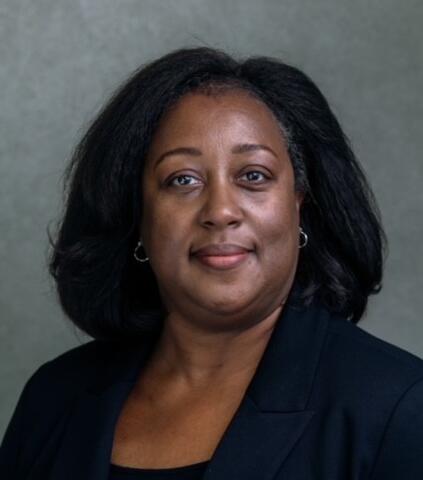
by Anna De Cheke Qualls
Dr. Tracey Thomas’s journey into science began long before she ever stepped into a laboratory. Raised in Birmingham, Alabama, by a registered nurse and a Social Security Administration accountant, she grew up in a home where education was treated as both an opportunity and a responsibility. Her childhood curiosity—often expressed through taking apart household objects just to put them back together—hinted at an early fascination with how things worked. But it was her father’s battle with cancer, and his eventual passing, that transformed that curiosity into a profound scientific drive.
That drive carried her through a rigorous biology curriculum and into a doctoral program at Howard University, where she earned her PhD in 2000 studying cell signaling and calcium mobilization. A postdoctoral fellowship at the Johns Hopkins School of Medicine followed, allowing her to delve deeper into cellular mechanisms by examining HIV–host cell interactions. Like many young scientists, Thomas initially imagined a future rooted in academia. Yet a pivotal AAAS Science Policy Fellowship revealed a broader landscape—one where her strengths in strategy, communication, systems thinking, and translating complex science for decision‑makers could have wide‑ranging impact.
Today, Thomas works at the intersection of science, technology, strategy, and professional development. With experience spanning industry, government-adjacent organizations, and biodefense, she now channels her expertise into helping others recognize the full breadth of their own potential. Her path stands as a testament to the power of resilience, curiosity, and the belief that a scientific career can extend far beyond the four walls of a laboratory. The Sway sat down with her to taker deeper dive into her career journey.
THE SWAY: Tell us about your consulting business and how it came to be. Did you have a business plan? How long did it take to go live with your services? What steps did you take?
DR. TRACEY THOMAS: More Than STEM grew directly out of conversations I kept having with graduate students and early-career PhDs who felt stuck, invisible, or unprepared for careers outside academia—even though they were incredibly capable. I realized there was a real gap between doctoral training and the realities of the broader workforce. Initially, I did not have a formal business plan. When I realized that the information, services, and resources were in high demand, I joined an incubator to help organize and solidify the business. I started with clarity of mission first: to help scientists translate their training into meaningful, sustainable careers. I validated the idea informally by offering one-on-one advising, workshops, and resources, then paid close attention to what people actually needed. From there, I formalized offerings into courses, roadmaps, and curated resources. From idea to “going live” with services took over a year and that was mostly finding time to pool together best practices and lessons I learned throughout my career into products and offerings that are accessible and impactful. The key steps were defining the audience clearly, starting small, building while learning, and being willing to iterate. I didn’t wait for perfection. I took cues from my audience on what is needed and useful.
TS: What communities do you serve and why?
TT: I primarily serve graduate students, postdocs, and early-career STEM professionals—especially those who are first-generation scholars, women, and people of color. These are communities that often lack access to informal networks, career transparency, and mentorship that are readily available in other communities. I serve these groups because I was them. I understand the unspoken rules, the imposter syndrome, and the frustration of feeling overtrained yet underprepared for what comes next. More Than STEM exists to make the invisible visible—to provide language, tools, and confidence so people can advocate for themselves and design careers that actually fit their lives.
TS: What’s it like being a consultant while also working? How do you balance both?
TT: It’s challenging but very doable with boundaries and clarity. I’m intentional about how I allocate my time and energy. I don’t try to do everything at once, and I’ve learned that consistency matters more than intensity. Some seasons are about growth; others are about maintenance. I also make sure the work I do through More Than STEM is aligned with my values and long-term vision, which makes it feel energizing rather than draining. Balance, for me, isn’t necessarily about equal time as much as it’s about sustainability.
TS: Does your business ever coincide with your work? Is there synergy?
TT: There is synergy in the skills, not in the content. My professional work as a biodefense professional sharpens my ability to think strategically, manage complex stakeholders, and communicate clearly—skills that directly enhance my business. At the same time, my work with early-career scientists keeps me grounded and connected to emerging talent and perspectives. I’m very mindful about ethics and boundaries – I provide regular updates to my job on my business; that’s required. I do believe that when your skills are transferable, everything you do makes you better at everything else.
TS: What advice would you give to a future STEM professional pursuing graduate-level studies? How can they expand their skill set to diversify their careers?
TT: First, recognize that your PhD is training you to solve hard problems—not just to do experiments. Start naming and documenting your transferable skills early: project management, data analysis, writing, leadership, and systems thinking. Second, don’t wait until your final year to explore careers. Talk to people. Read job descriptions. Try informational interviews. Build skills intentionally—whether that’s learning to communicate with non-technical audiences, gaining basic business literacy, or understanding policy and industry landscapes. Be sure to follow developments in artificial intelligence, gain basic knowledge, and see how it connects to your field. Finally, give yourself permission to want more than one thing. A successful STEM career doesn’t have to look like anyone else’s.
TS: What are your long-term plans for your business?
TT: Long term, I see More Than STEM as a trusted ecosystem for career navigation—offering courses, community, tools, and thought leadership that support scientists across career stages. I want it to be a place where people return at different points in their journey, not just once. The goal is impact and sustainability: scalable offerings, deeper partnerships, and continued expansion into areas where scientists need translation, confidence, access, and strategy—not just information.
TS: Fun fact: What is your favorite activity?
TT: Hands down—hiking in crisp fall air, preferably with a warm drink in hand and zero urgency. My birthday occurs during fall (in November!) and so this time of year feels reflective to me. I consider it my personal “new year” and love using the season to reset, plan, and realign.
----
Dr. Tracey Thomas can be found on LinkedIn and Instagram (@more_than_stem). She recently co-authored Our Doctoral Journey, Volume II, which tells the story of 24 exceptional women of color and their doctoral journeys; her story is highlighted in Chapter 5.