
Word to the Wise | Dr. Susanna Sacks
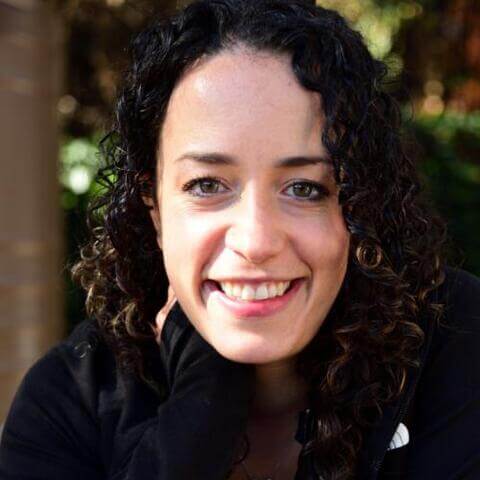
by Anna De Cheke Qualls
On an ordinary weekday, Dr. Susanna Sacks moves between worlds: from the quiet focus of early-morning writing, to the charged energy of the classroom, to the administrative demands that attend contemporary academic life. It is a rhythm that mirrors her scholarship—one deeply attuned to the movements of language, labor, and value across borders.
Sacks, an assistant professor in English and literature, is a scholar of African literature whose work examines how global political and economic systems shape cultural production in southern Africa. But her intellectual commitments were formed long before she entered a classroom as a professor. She grew up in suburban Boston, in a home steeped in literature and the arts, alongside a strong ethical imperative to contribute meaningfully to the world. “I wanted to do something that used language to improve human flourishing,” she says.
For years, Sacks imagined that work would take her to law school and into human rights advocacy. Literature, despite being a lifelong love, felt too distant from material realities to matter in the way she hoped. That assumption unraveled during her undergraduate years, when she worked as a research assistant for Professor Kim Benston on The Norton Anthology of African American Literature, focusing on the Black Arts Movement. The experience reshaped her understanding of literature’s power and stakes. “That work showed me how tangible an impact literature has on our daily lives and broader world,” she reflects.
From there, her path turned decisively toward the study of literary movements that sit close to political struggle. Her interest in the Black Arts Movement led her to South Africa’s Black Consciousness Movement, where poetry and performance have long played a visible role in public life, protest, and nation‑building. Graduate school followed, driven by questions about how language participates in political resistance and collective imagination. Along the way, she found mentors who encouraged her to trust her intellectual instincts even as her work evolved in unexpected directions.
Today, Sacks describes academic life with characteristic precision and humor. “It’s kind of three jobs in a trenchcoat,” she says of her role, which requires her to be at once a researcher, a teacher and mentor, and an administrator—often all in the same day. The variety is energizing, but it also demands careful boundary‑setting to protect time for sustained research.
That research has already yielded a significant first book, Networked Poetics, which examines how young poets in southern Africa use social media to build communities and extend political action beyond the moment of live protest. In the book, Sacks tracks the surprising afterlives of poetry—how a performance at a demonstration can circulate transnationally through platforms like YouTube, shaped in turn by algorithms and platform economics. The project revealed not only new poetic networks but also the uneven infrastructures that govern who gets seen, heard, and paid.
Those infrastructures—and their consequences—became central to her current book project, A World of Debt. Where Networked Poetics focused on digital circulation, the new work shifts attention to global financial systems, sovereign debt, and the long shadow of structural adjustment programs across African cultural life. Sacks asks how neoliberal economic policies have constrained education and the arts—and how artists have responded by inventing alternative modes of collaboration and survival.
Her research traces collective formations like the Malawi Writers’ Group and Zambia’s Chikwakwa Theatre, organizations that emerged precisely because formal support structures were absent. Operating partly outside conventional markets, these collectives model different ways of valuing artistic labor, prioritizing community engagement and shared sustenance over profit. They reveal how culture persists—and even flourishes—under conditions designed to marginalize it.
This project is not abstract for Sacks. Its origins are personal and pedagogical. Teaching undergraduates, she began to notice how student debt narrowed her students’ sense of possibility and shaped their visions of the future. She also watched colleagues across the world work under growing pressure as the humanities were rhetorically and financially devalued. “I saw a world shaped by the arts,” she says, “justifying defunding the arts because there wasn’t enough ‘market demand.’”
At the center of A World of Debt is a challenge to the assumption that markets offer a neutral or sufficient measure of value. “When value is indistinguishable from price, we lose track of different forms of value,” Sacks observes. Her work insists that literature and the arts are not luxuries but essential sites where societies negotiate meaning, dignity, and collective life—especially in moments of economic constraint.
Balancing these expansive intellectual commitments with the demands of academic life requires, as Sacks readily admits, constant experimentation. She laughs at the description of herself as a “one‑person entity,” recognizing how accurately it captures the tensions of the profession. Over time, she has developed systems that protect her energy and attention: parallel paper and digital calendars, firm boundaries around evenings and weekends, and an early‑morning writing practice that allows her to work before the day’s demands intrude.
“I have learned that I cannot work after 6 pm,” she says, a boundary that has become core to her sense of sustainability. Her days are carefully structured: writing and reading early, teaching and meetings later, with built‑in transitions that help her move between roles. She urges graduate students to treat academic work as work—with schedules, task‑chunking, and deliberate care—rather than an endless, guilt-laden obligation.
Underlying these strategies is a deeply human philosophy. “Remember that you’re a person, too,” she advises her students, urging them to protect the parts of their lives that keep them grounded in community and embodiment. For Sacks, productivity and care are not opposites but mutually reinforcing commitments.
When asked about the future, she resists offering a fixed roadmap. Research, she insists, is most generative when it remains open to surprise. Still, she hopes to bring her ideas to broader audiences through public‑facing writing and collaborative humanities projects. Above all, she looks forward to growing as a teacher and mentor, extending to others the same support that shaped her own path.
In an era when the humanities are often asked to justify themselves in economic terms, Sacks’ work offers a different account—one that insists on literature’s capacity to diagnose injustice, imagine alternatives, and sustain collective life. Her scholarship does not simply analyze systems of value; it asks readers to reconsider what, and whom, we value in the first place.